Kenya's National Infrastructure Fund has started investing its Sh340 billion seed capital, marking the beginning of a new approach to financing major development projects.
The fund is expected to support projects in roads, energy, water, transport, agriculture and digital infrastructure while also attracting money from private investors and financial institutions.
However, the first investment is not a new road or power plant.
The National Infrastructure Fund (NIF) has started placing part of its money in domestic government bonds as it works to protect its capital while earning income.
Fund expects income from government bonds
NIF Chief Executive Officer James Mworia said the fund expects its government bond investments to generate about Sh42 billion annually.
The strategy is designed to allow the fund to earn returns while keeping the original capital available for future infrastructure investments.
The fund's projections are based on government securities offering returns of around 12% to 14% annually, with about 12.5% used in its calculations.
If the entire Sh340 billion generated a return of about 12.5%, it would produce approximately Sh42.5 billion in annual income.
The approach means the fund can potentially use investment income and its capital to support infrastructure projects without immediately spending the entire seed fund.

The National Infrastructure Fund was established through the National Infrastructure Fund Act, 2026.
The law took effect on March 25, 2026, after it was signed into law by President William Ruto.
The fund is intended to bring together money from different sources, including pension funds, collective investment schemes, sovereign wealth funds and private investors.
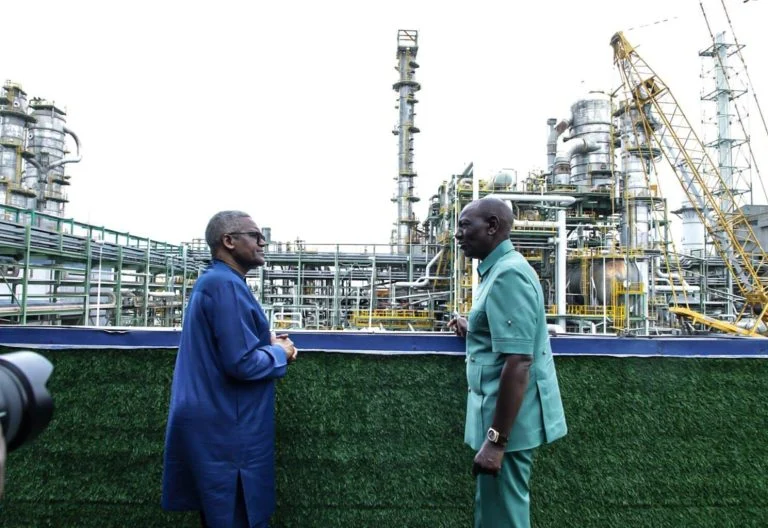 Magogoni: Quiet Lamu Area Set to Host KSh2.2 Trillion Dangote RefineryMagogoni, once a quiet farming and fishing settlement in Lamu West, is preparing for a major transformation as…
Its initial capital came from the government's partial monetisation of state assets, including interests linked to Kenya Pipeline Company and Safaricom.
The broader goal is to turn state assets into a source of long-term investment capital.
Instead of relying mainly on new government borrowing every time a major project needs financing, the fund is expected to help create projects that can attract additional private money.
Roads, energy and water among target areas
The fund can support a wide range of national infrastructure.
These include highways, railways, airports and seaports.
Energy projects are also included, covering electricity generation, transmission and distribution.
Other areas include information and communication technology infrastructure, water reservoirs, irrigation, agriculture and livestock projects.
The fund's investment framework focuses on projects that can demonstrate financial and commercial viability.
This means projects are expected to have the potential to generate returns rather than receiving money simply because they are politically popular or socially important.
Limits placed on individual projects
The fund has also established measures intended to reduce investment risks.
Under the framework, one project should not account for more than 20% of the fund.
Comments (0)
Be the first to comment on this story.