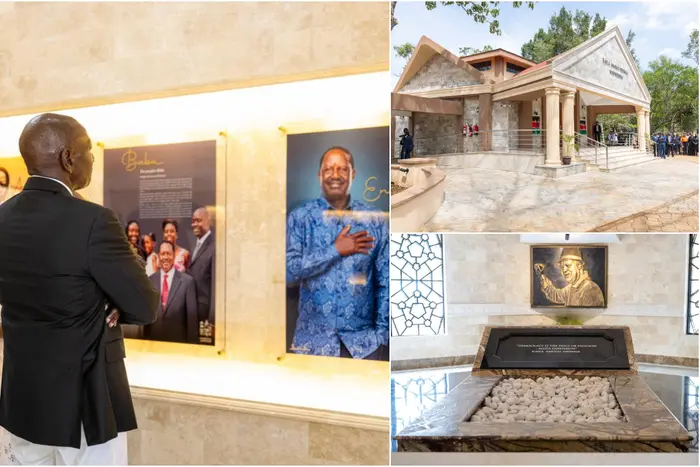
President William Ruto has officially unveiled the mausoleum of former Prime Minister Raila Odinga at Kang’o ka Jaramogi in Bondo, Siaya County.
The ceremony took place on Wednesday, October 7, 2026, bringing together members of the Odinga family, senior political leaders and other invited guests.
However, one notable absence was ODM leader Oburu Oginga, Raila’s elder brother.
Oburu did not attend the ceremony despite having been expected to take part in events marking the life and legacy of his late brother.
 MPs Worried About 2027 Results, Threatens to Shut Down Media Outlets Over Election Rigging ClaimsMPs have raised concerns over election-related reports ahead of the 2027 General Election, warning that unveri…
Raila Junior apologises for Oburu's absence
Raila Odinga's son, Raila Odinga Junior, addressed the gathering and conveyed an apology from Oburu for missing the event.
His secretariat said on Tuesday that the ODM leader was alive and recovering steadily.
The office also said his doctors had advised him to rest and avoid strenuous activities. It did not disclose the medical condition for which he was receiving care.
According to his secretariat, Oburu had continued following political and national developments despite being away from public activities.
 Ruto Opens New TVET Campus in Uasin Gishu, Announces Plans to Build Student HostelsPresident William Ruto has opened the Kenya School of TVET Moiben Campus in Uasin Gishu County and announced p…
The office also said he had been preparing remarks for the mausoleum ceremony before reports about his alleged death began circulating.
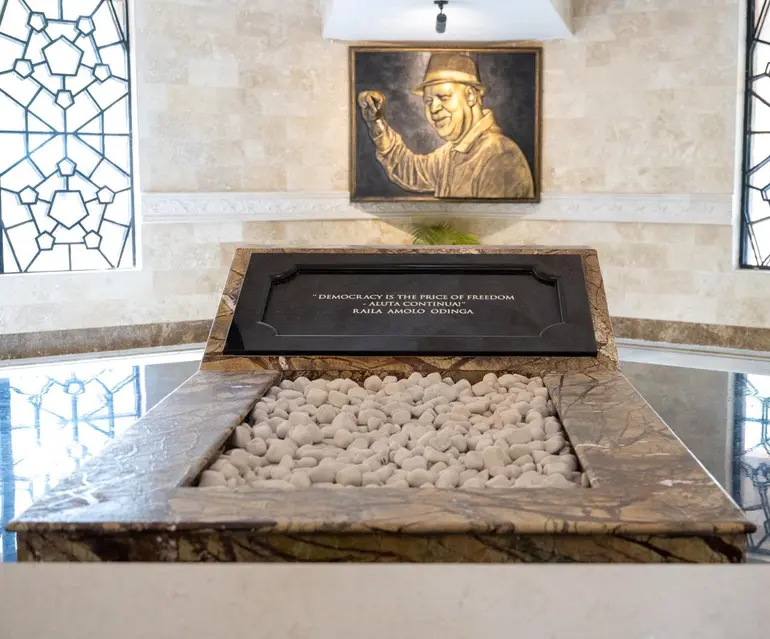
Ruto unveils Raila's final resting place
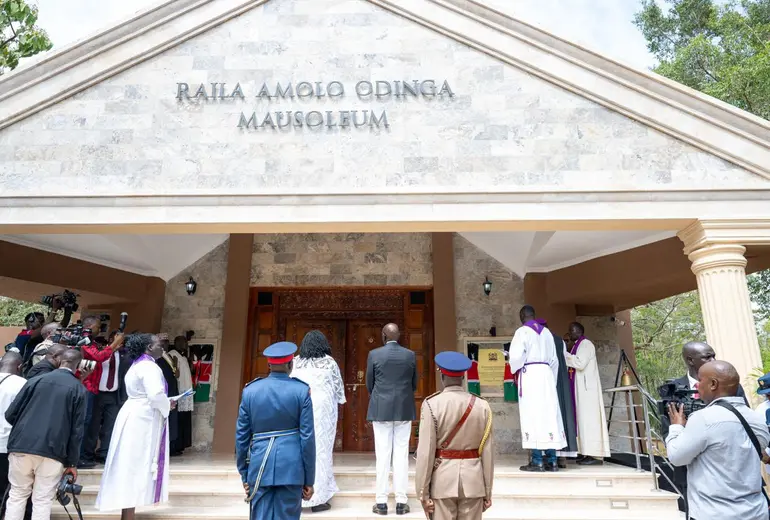
President Ruto formally dedicated Raila's final resting place during the ceremony.
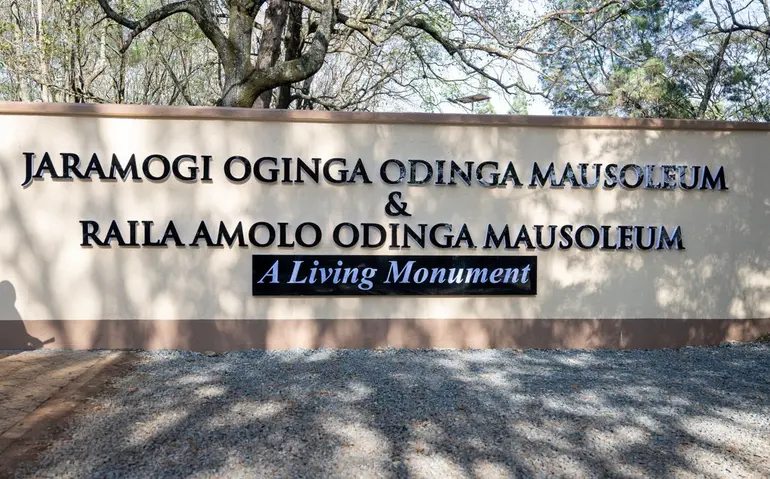
The mausoleum stands next to the tomb of Jaramogi Oginga Odinga, Raila's father and Kenya's first vice president.
Raila's widow, Mama Ida Odinga, attended the event alongside members of the family.
 Former Chief Justice David Maraga Mourns Sister Who Dies at 107 as Family Announces Friday Burial in KerichoFormer Chief Justice David Maraga is mourning his sister Sabina Kemunto Otiambo, who died at 107, with her bur…
Oburu's son, Jaoko, was also present.
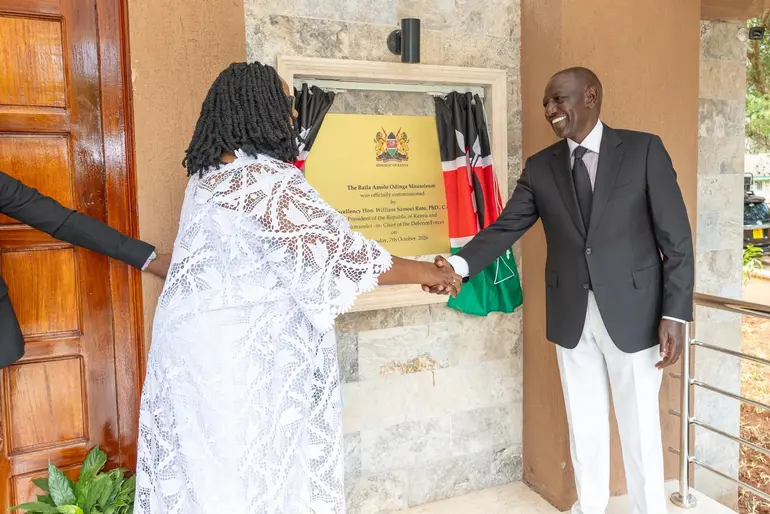
Kenya Defence Forces personnel also provided a ceremonial send-off during the event.
Access to the homestead was restricted, although designated areas were provided for members of the public to follow the proceedings.
Why Raila's mausoleum has five sides
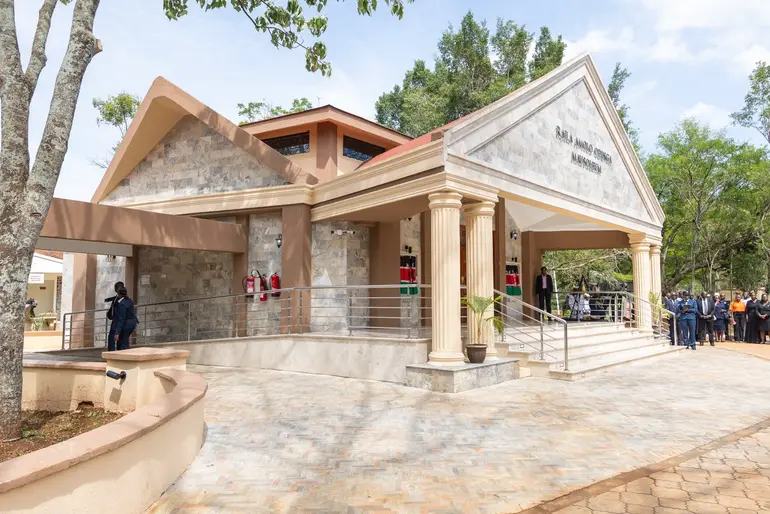
One of the most distinctive features of Raila's mausoleum is its five-sided design.
 Governor Natembeya to Turn Hospital to University as Feud With President William Ruto Over Projects EscalatesTrans Nzoia Governor George Natembeya has announced plans to convert Wamalwa Kijana Hospital into a university…
The shape was chosen to complement the six-sided tomb of his father, Jaramogi Oginga Odinga.
Officials involved in the project explained that the contrasting designs were intended to show the connection between the father and son while giving each memorial its own identity.
During the period leading to the 2007 General Election, Raila brought together several influential political figures under the Orange Democratic Movement.
The group became widely known as the ODM Pentagon.
 Ruto Explains How Treasury Single Account Will Strengthen Payroll Controls and Prevent Misuse of Taxpayers' MoneyPresident William Ruto has explained how the Treasury Single Account will strengthen payroll controls and impr…
The design of the mausoleum therefore connects Raila's political history with his family's story and his long public career.
KDF engineers built the structure
Kenya Defence Forces engineers worked on the construction of the mausoleum together with technical experts from the museum sector.
Once the project is fully established as a heritage site, the National Museums of Kenya is expected to manage and preserve it.
Raila's legacy
Raila died on October 15, 2025, at the age of 80 after decades in Kenyan politics.
He served as Kenya's Prime Minister and remained one of the country's most prominent political figures for many years.
The new mausoleum is expected to become an important site for people wishing to learn about his political career, family history and contribution to Kenya's public life.
Comments (0)
Be the first to comment on this story.